
TC

Double-Lip Oil Seal

Product Description

Key Features & Merits

Technical Parameters

TEMPERATURE:
PRESSURE:
SPEED:

Medium (Applicable Media)

Material Comparison

Product Image
sealthai.com
Cross Section
sealthai.com
Hydraulic Seal

How to Measure Dimensions (ID × OD × THK)
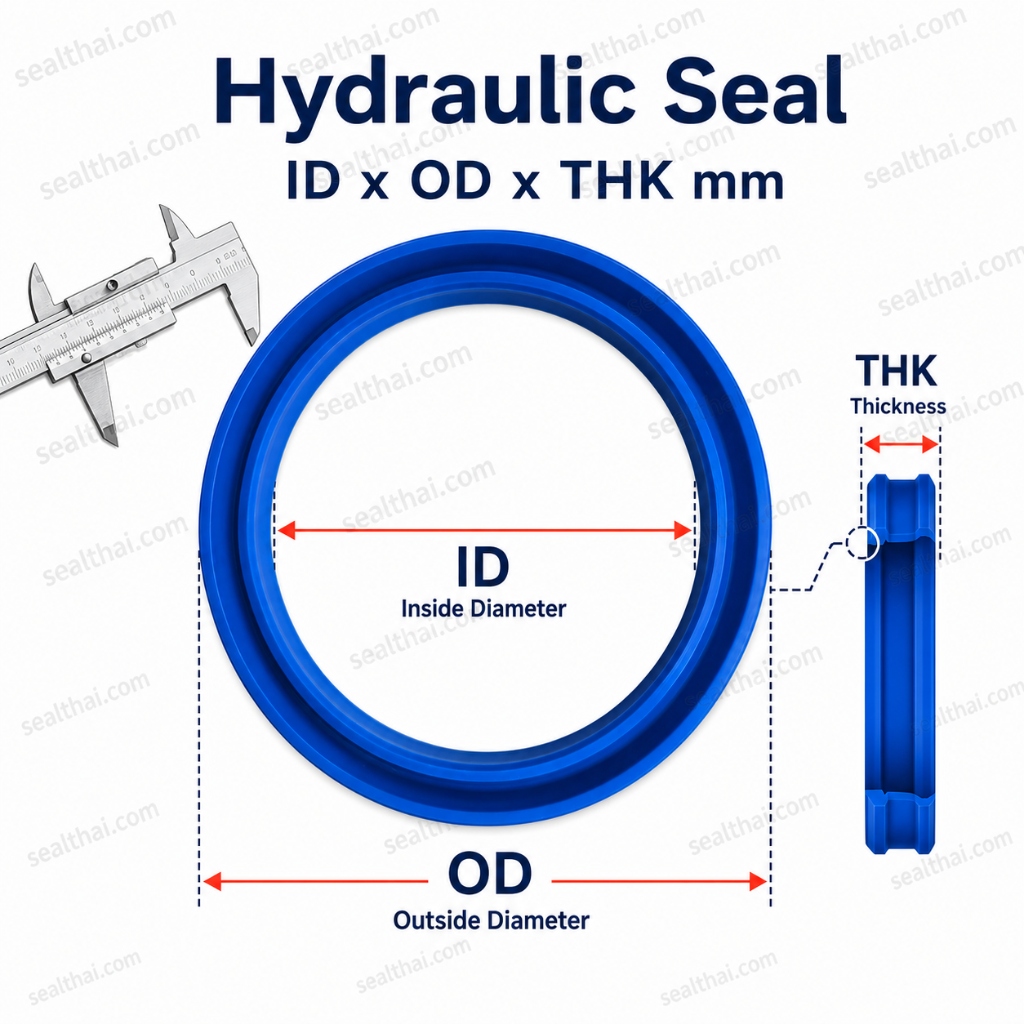
How to Measure Hydraulic Seals

Size Data for (ID × OD × THK) Inside Diameter x Outside Diameter x Thickness

Total 0 sizes

Frequently Asked Questions (FAQ) - Hydraulic Seals

What is a Hydraulic Seal and what is its role?
A hydraulic seal retains pressurized fluid within a hydraulic cylinder, preventing fluid from leaking across the piston chamber (Piston Seal) or leaking past the rod into the environment (Rod Seal), ensuring optimal hydraulic force and mechanical efficiency.
What operating temperatures and pressures can hydraulic seals withstand?
This depends on the material chosen. Polyurethane (PU) seals typically support pressures up to 400 bar and temperatures around -35°C to +100°C. For higher temperature requirements (up to 200°C), consider Viton (FKM) or PTFE compounds.
What causes hydraulic seal failure and leaks?
Primary causes include: 1. Natural seal wear or material hardening over time, 2. Abrasive contamination caused by worn wiper seals, 3. Operating temperatures exceeding material limits, and 4. Contaminated or degraded hydraulic fluid.
How can I order hydraulic seals from SEALTHAI and do you offer cross-referencing?
We offer complimentary cross-referencing assistance. You can search by dimension directly on sealthai.com or message our engineering staff via LINE OA: @sealthai. We carry brands like Hallite, Kastas, and quality alternatives with ready stock.